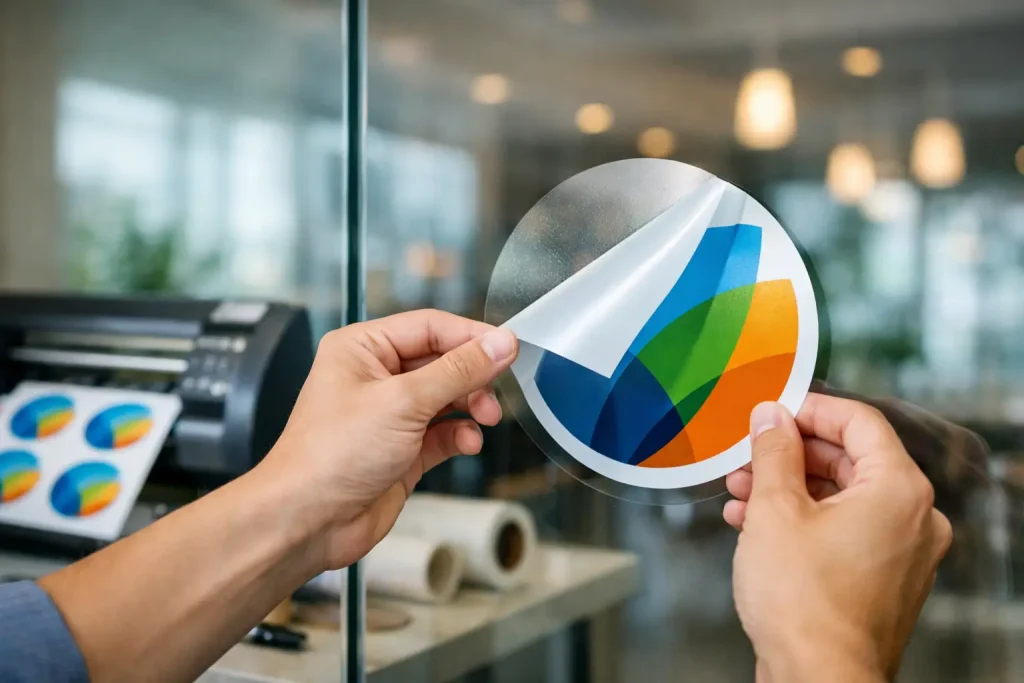
A glass surface does not give you much room for error. If the artwork is weak, the adhesive fails, or the finish does not suit the lighting, the result looks cheap fast. That is why glass sticker printing is less about placing a logo on a window and more about choosing the right material, print method, and installation approach for the job.
For business buyers, glass graphics usually need to do one of three things well. They need to sell, direct, or screen. A retail window may need high-impact promotional graphics that pull foot traffic. An office partition may need frosting for privacy without shutting out light. A restaurant door may need clean branding, opening hours, and compliance details that stay readable through daily use. The right specification depends on which of those jobs matters most.
Where glass sticker printing works best
Glass graphics are common because they solve practical branding problems without major renovation. Storefront windows can carry campaign visuals, sale messaging, QR-based promotions, and operating details while keeping the glass itself intact. In offices, meeting rooms and internal partitions often use printed or frosted stickers to create privacy zones, add branding, or mark departments.
F&B operators use them on entrance doors, display panels, chillers, and takeaway counters. Exhibition teams use glass sticker printing on showcase panels, enclosed demo areas, and temporary event structures where visibility matters but branding still needs to be present. Commercial buildings also use window stickers for directional signage, safety markings, and access control labels.
The appeal is simple. You can change the message without replacing the fixture. That matters when promotions rotate, tenants change, or campaign timelines are short.
Choosing the right type of glass sticker printing
Not all window stickers are the same, and this is where many projects go off track. A buyer asks for a “glass sticker,” but the actual requirement could be clear vinyl, white vinyl, frosted film, one-way vision, or reverse-printed graphics for inside application.
Clear vinyl for minimal visual weight
Clear vinyl works when you want branding to sit lightly on the glass. It is useful for logos, opening hours, or design elements that should not block visibility. The catch is that color appearance depends heavily on the background and lighting. Pale colors can disappear on glass, especially under strong daylight. White ink or a printed backing may be needed if legibility matters.
White vinyl for bold promotional messaging
White vinyl is the standard choice when the message needs to stand out. Retail sale graphics, campaign decals, and tenant branding often use this format because colors stay solid and readable. It covers more of the glass, so it is better for impact than subtlety.
Frosted film for privacy and a finished office look
Frosted graphics are common in corporate interiors, clinics, and meeting rooms. They add privacy while still allowing light through, which makes them a practical alternative to blinds or permanent treatments. Frosted film can be cut with logos, stripes, or custom patterns, so it can do branding and screening at the same time.
Reverse print for inside application
When stickers need protection from weather or tampering, reverse print is often the better call. The graphic is printed to be viewed from the outside but applied from the inside of the glass. This works well for street-facing windows and internal retail displays. It only works when the glass is clear enough and the viewing conditions support it.
Perforated film when visibility matters both ways
One-way vision film is useful when you want exterior graphics but still need people inside to see out. It is common in transport branding and some retail settings. Still, image quality is not the same as a solid print, and nighttime lighting can reduce the one-way effect. It works best when expectations are realistic.
Design considerations that affect the final result
With glass, design is not just about appearance. It affects readability, installation, and lifespan.
Small text often looks fine on screen and weak on actual glass, especially if the background changes throughout the day. Thin lines can also get lost. If the sticker is for public-facing information like business hours, room names, or promotions, clarity should come before detail.
Color also behaves differently on transparent materials. A strong brand color may print well on white vinyl and look washed out on clear film. Metallic effects, translucent layers, and white ink can improve results, but they add production considerations. For many business applications, a simpler layout with stronger contrast performs better than a highly layered design.
Scale matters too. A logo that works on packaging may not work on a full glass partition. Window graphics need to be sized for actual viewing distance. A shopper passing a storefront sees the message in seconds. An office visitor approaching a meeting room door needs quick recognition, not design complexity.
Durability depends on use, not just material
Business buyers often ask how long a sticker will last, but the better question is where and how it will be used. Interior glass graphics generally last longer because they are not exposed to direct rain, UV stress, or repeated cleaning from outdoor dust and traffic.
Exterior-facing window stickers deal with heat, moisture, and cleaning chemicals. If the area gets strong sunlight, fading and adhesive wear become more relevant. If the sticker sits near a handle or entry point, edge lifting is more likely. A short-term campaign and a long-term brand installation should not be produced the same way.
This is why quote-driven print work matters. The right recommendation depends on location, expected lifespan, and replacement cycle. A six-week promo graphic does not need the same build as permanent branch signage. Over-specifying wastes budget. Under-specifying creates rework.
Installation is part of the quality
A well-printed sticker can still fail if it is installed badly. Bubbles, uneven alignment, visible seams, and lifting edges are usually installation problems, not print problems. Large glass panels are especially unforgiving because every flaw shows under reflection and daylight.
For small decals, self-application can work if the glass is clean and the artwork is simple. For larger storefront graphics, multi-panel frosting, or full-height office partition work, professional installation saves time and avoids waste. It also matters when brand consistency is expected across multiple rooms, outlets, or event zones.
In active business environments, installation timing matters as much as the print itself. Retailers may need overnight work. Offices may want meeting rooms completed outside operating hours. Event setups often have narrow access windows. A supplier that handles both production and installation is usually easier to coordinate than splitting the work across vendors.
Glass sticker printing for different business settings
Retail usually prioritizes visibility and campaign speed. Window sale graphics, launch visuals, and seasonal branding need strong print, fast turnaround, and clean removal after the promotion ends.
Corporate offices usually prioritize finish and consistency. Frosted meeting room bands, branded partitions, and door markings need to look permanent even when they are not. Here, precision matters more than visual volume.
F&B and hospitality often need a mix of branding and operations. Entrance decals, menu highlights, safety notices, and counter graphics have to stay clean, legible, and aligned with the customer experience.
Exhibitions and events need temporary solutions that still photograph well. Glass sticker printing in these environments has to balance speed, transport handling, and setup conditions. Materials should match the duration of the event, not exceed it by default.
What to prepare before requesting a quote
A better quote starts with better project details. Dimensions, glass location, intended use, artwork status, and installation timing all affect production planning. It also helps to clarify whether the graphic is meant for short-term promotion, medium-term branding, or long-term privacy and signage.
If you are ordering for multiple branches or rooms, list the variations early. If installation access is restricted, mention it upfront. If the glass already has old adhesive residue or existing film, that should be part of the discussion too. These details reduce revisions and shorten approval time.
For businesses managing several branded elements at once, it is often more efficient to source glass graphics alongside related signage, display materials, or event outputs through one production partner. That keeps color, scheduling, and installation coordination tighter, especially when the project extends beyond a single sticker application.
Glass graphics are often treated like a minor print item until they go on a very visible surface. Then every production choice shows. If the goal is to make the space sell better, work better, or look more finished, the smart move is to specify the job based on use, not just price.