A polo shirt for a front-of-house team, safety apparel for site crews, and event tees for a one-day launch may all carry the same logo, but they should not necessarily use the same decoration method. Embroidery versus heat transfer is a practical production decision that affects the look, comfort, turnaround, durability, and budget of your branded apparel.
For business buyers, the best option is rarely the one that looks best in a product photo. It is the method that matches the garment, artwork, quantity, and actual working conditions. A stitched logo can make a corporate uniform feel established and premium. A heat-applied graphic can reproduce small text, color gradients, and large artwork that embroidery cannot handle cleanly.
Embroidery versus heat transfer: what changes
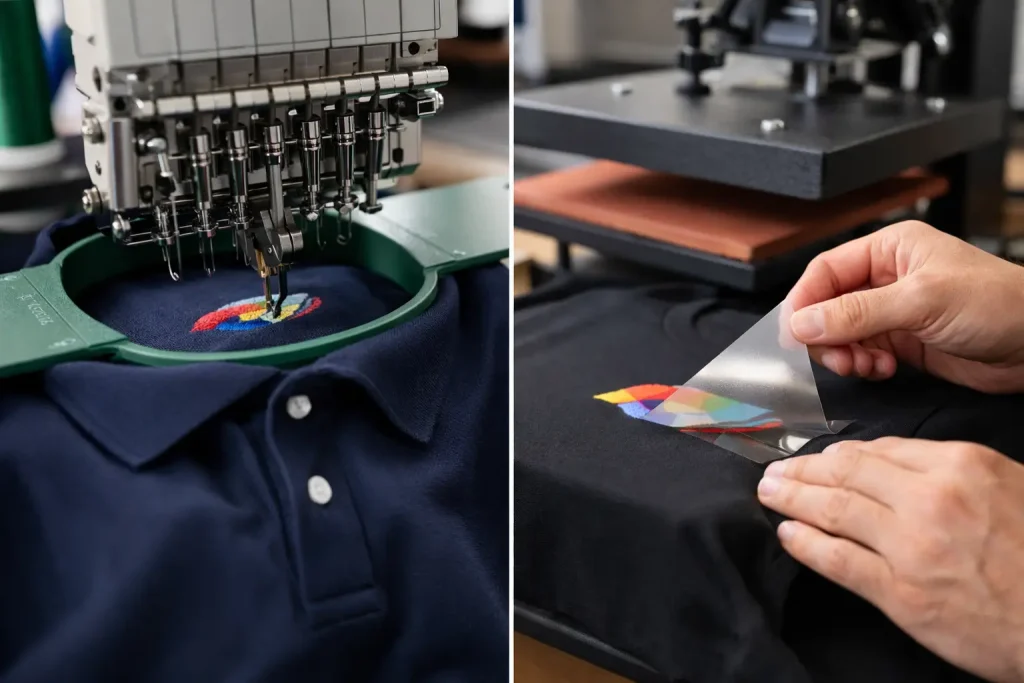
Embroidery builds a design with thread stitched directly into the garment. It creates a raised, textured finish that is especially common on polos, jackets, caps, aprons, button-down shirts, and durable workwear. The design is first converted into a stitch file, then produced using thread colors and stitch patterns selected for the fabric and logo.
Heat transfer applies a printed or cut design to the garment using heat and pressure. Depending on the artwork and apparel requirement, this may involve vinyl, digital heat transfer film, or a printed transfer. It leaves a flatter result than embroidery and can reproduce detailed artwork with much greater accuracy.
The difference is visible from a distance. Embroidery reads as texture and craftsmanship. Heat transfer reads more like a clean printed graphic. Neither is automatically better. The right result depends on what the garment needs to do for your brand.
When embroidery is the better fit
Embroidery works best when the logo is simple, the decoration area is modest, and the garment needs a polished uniform appearance. It is a strong choice for staff polos, hospitality uniforms, corporate jackets, caps, chef coats, and embroidered patches.
A left-chest logo is the most familiar embroidery application. At this scale, bold lettering and clear logo shapes tend to stitch well. Thread also gives solid-color marks a visual depth that printing does not replicate. For a company whose teams meet customers daily, that detail can make ordinary workwear feel more intentional.
Durability is another reason businesses choose embroidery. A properly digitized and stitched logo generally holds up very well through repeated use and laundering. It is less vulnerable to surface abrasion than many printed finishes, making it useful for uniforms intended to stay in service over a long period.
However, embroidery has limits. Very small text can close up, thin lines may disappear, and color gradients cannot be recreated stitch for stitch. Dense embroidery can also feel stiff, particularly on lightweight tees or performance fabrics. A large stitched design across the back of a shirt may look heavy, pull on the fabric, and add unnecessary cost.
Embroidery pricing is usually driven by stitch count rather than only the printed area. A compact one-color logo with a simple shape may be efficient to produce. A large, highly detailed crest with multiple colors can require many more stitches and more production time. That is why two logos of a similar physical size can receive very different quotations.
Artwork considerations for embroidery
Before approving an embroidered logo, check the smallest letters, fine outlines, and tightly packed elements. Simplifying artwork is not a compromise when it improves legibility on fabric. In many cases, a version of the logo created specifically for embroidery will look more professional than forcing a detailed digital logo into thread.
Fabric matters as well. Stable fabrics such as pique polos, twill caps, and structured jackets support embroidery well. Thin cotton, stretch garments, and lightweight activewear require greater care because dense stitching can distort the material. Backing may be used to stabilize the garment, but it can affect comfort on the inside of the shirt.
When heat transfer is the better fit
Heat transfer is often the practical choice for promotional shirts, sportswear, event apparel, campaign merchandise, safety vests, and designs that need full-color detail. It is particularly useful when a logo includes a gradient, photographic element, fine type, or several brand colors.
Unlike embroidery, heat transfer does not need to translate artwork into thread. A detailed logo can remain sharp, and small text can often be reproduced more accurately when the transfer is made at an appropriate size. This makes it suitable for brand marks that have strict color and visual guidelines.
Heat transfer is also better for larger designs. A bold back print, a full-front campaign graphic, individual staff names, jersey numbers, or sponsor logos can be applied without the weight of dense stitching. On moisture-wicking tees and sports jerseys, this can provide a lighter, more comfortable finish than embroidery.
For short runs, personalization, and varied names or numbers, heat transfer can offer a more efficient production route. Each garment can receive different information without changing the underlying artwork process. This is useful for event crews, school teams, retail promotions, and staff uniforms where roles need to be identified clearly.
The trade-off is that transfer quality depends heavily on the material, application settings, and care instructions. A professionally produced and correctly applied transfer can perform well, but it is still a surface application. Harsh washing, high dryer heat, aggressive ironing, or poor-quality application can shorten its useful life. Buyers should discuss the intended use before selecting a transfer type.
Artwork considerations for heat transfer
Heat transfer gives designers more freedom, but placement and size still matter. Large solid areas can reduce breathability, especially on lightweight apparel. A full-front graphic may be visually effective for an event tee but less suitable for staff members who wear the shirt for a full shift.
The garment color also affects the final result. Dark shirts may require a white underbase beneath the design, while certain technical fabrics need specialized transfer materials to avoid dye migration or adhesion issues. Supplying the intended garment type and color during quotation helps prevent production surprises.
Comparing cost, speed, and order quantity
The fastest way to choose is to look beyond a per-piece price. Setup, artwork complexity, garment type, quantity, and delivery date all affect the most economical method.
Embroidery often has an initial digitizing requirement because the logo must be converted into stitch instructions. Once approved, that file can be used for repeat orders of the same design. This makes embroidery attractive for ongoing uniform programs, especially where the left-chest logo remains consistent across polos, jackets, caps, and other apparel.
Heat transfer usually suits artwork that changes frequently or orders that include variable details. It can also be cost-effective for large, colorful graphics that would require excessive stitch counts if embroidered. For a short promotional run, a detailed transfer can deliver stronger visual impact without paying for a large stitched area.
Rush orders should be evaluated case by case. Production capacity, garment availability, artwork readiness, and the number of decoration locations matter as much as the method itself. A simple logo on stocked polos may move quickly, while a complex order involving multiple garments, individual names, and special placements requires more coordination regardless of the application method.
Use the garment and use case to decide
A clean way to brief an apparel project is to identify who will wear it, how often it will be worn, where the logo will sit, and how detailed the artwork needs to be. These details lead naturally to the right method.
Choose embroidery when you need a professional, long-term uniform finish; the design is compact and simple; and the garment is structured enough to support stitching. It is especially effective for customer-facing teams, corporate apparel, and branded headwear.
Choose heat transfer when you need full-color detail, large graphics, variable names or numbers, or a lightweight application on tees and activewear. It is often the stronger option for events, campaigns, sports apparel, and temporary promotional use.
Some apparel programs benefit from both. A company may embroider its primary logo on staff polos and jackets, then use heat transfer for event tees, campaign graphics, or role-specific names. This keeps the core uniform consistent while allowing each garment to serve its specific purpose.
Prepare a clearer apparel quotation
The most useful quote request includes the logo file, garment style or reference, garment colors, quantity by size, decoration positions, and required delivery date. If the logo contains fine detail, request a production recommendation rather than assuming the same artwork should be used for every application.
At Pisti Prints, apparel decoration can be planned alongside banners, event backdrops, retail signage, and other campaign materials, helping business teams coordinate physical branding with fewer production gaps. Share how the apparel will be used, not just what you want printed. That one detail often determines whether embroidery or heat transfer gives your team the better result.
A shirt can carry a logo for years or for one busy weekend. Select the decoration method for that job, and the finished apparel will look right, wear better, and support the brand work it was ordered to do.